Showing posts with label social drama. Show all posts

Tuesday, October 12, 2010

E.M. Forster: Howards End

**This review was contributed by another new guest author, Thunderfist, who takes his name from the hero of C.S. Lewis' classic travelogue "A Horse and His Boy."  Enjoy!**

Although Howards End is one of my favorite books, it often slips my mind when I think about English literature. Part of the reason for this is that its author, E. M. Forster, occupies an in-between time in world history: the close of the nineteenth century and the beginning of the twentieth. Victorianism was on the wane but World War One had yet to destroy Victorian and Romantic ideals. In a sense, Forster’s oeuvre in general reflects this transition: A Room with a View, published in 1908, is a novel of the nineteenth century, a traditional comedy of manners set in Italy and pastoral England. Published eighteen years later, A Passage to India is a dispassionate, modern depiction of British colonialism in India. Separating these two novels in the oeuvre is only Howards End, which captures the poignant transition between two very different centuries.
I have a long history with Forster: when I was fifteen I watched the classic film adaptation of A Room with a View and fell in love with its gorgeous portrayal of Edwardian England. From the rich and ceremonious dinners to the long sweeping gowns to the gaslamps and open carriages, A Room with a View is a period piece par excellence. The novel is a delight of witty dialogue and tongue-in-cheek narrative, following the tradition of Jane Austen. It portrays a sunny world of youth in which relational conflicts are easily cleared up with heart-to-heart honesty and a final surrender to true love; and its characters play tennis, drink tea and go on picnics in Arcadian countryside scenes.

In a conversation with the Supreme Arbitress of Taste, we agreed that A Room with a View is a novel of Forster’s youth whereas Howards End is a novel of his maturity. Written only two years later, Howards End is set in cosmopolitan London and focuses on a cultured, artistic family of two sisters and one brother. In an echo of Austen’s Sense and Sensibility, the older sister, Margaret, is a sensible woman who tempers her deep feelings with practicality, and the younger sister, Helen, is an emotional and romantic woman whose feelings draw her into other people’s troubles. These women become friends with two very different families: the rich and businesslike Wilcoxes and the poor, struggling, but sensitive and artistic Leonard Bast and his wife. Both families draw on the Schlegels’ sympathy: Mr. Wilcox loses his wife, Ruth (also a friend of Margaret’s), and Leonard Bast is threatened with hopeless poverty and unemployment. The famous epigram of the novel is “Only connect…” and the novel is indeed about different isolated clans within the social and economic structure of England, whose only connection is the Schlegels.

The Schlegel girls occupy a place of freedom in the novel because they were born independently wealthy and have never been exposed to the hard, pragmatic aspect of making money. As their loyalties to the Wilcox and Bast families are taxed by love and misfortune, the underlying truths about both love and loyalty, about romantic ideals and real life, are questioned. At the center of the novel is a house, Howards End, a little old country house that becomes a point of contention between the Schlegels and the Wilcoxes: it belongs to Mr. Wilcox but, as his wife’s property, is left to Margaret upon her death in a note. At a glance, the novel seems like a large jigsaw puzzle with the pieces easily fitted into place: Howards End represents England and the three families respectively represent the business class, the artisans, and the common folk. Who will inherit England?

But Howards End, both the novel and the house it takes its name from, are much more than that. They are an emotional and spiritual evocation of England and the people who already live in her, none of whom really “own” her but who must fight for and against each other in the struggle to love her, preserve her, and change her. That Forster wrote the novel in 1910, only four years before the First World War, adds an unintentional poignancy to the story: for this world in which the families’ struggle takes place is itself on the brink of traumatic change.
Howards End, though not considered Forster’s greatest novel academically, is probably his most famous and popular. The epigram “Only connect…” is deservedly often alluded to by the literary world, and contemporary British author Zadie Smith wrote her novel On Beauty as an homage to Howards End. In this sense, “Only connect…” functions quite literally, for Forster’s novel indeed forges connections across centuries and different literary movements, from Austen’s neoclassical Sense and Sensibility to Smith’s postmodern On Beauty.

Of course, the real worth of Howards End lies simply in its literary beauty. Forster’s turns-of-phrase, his descriptions and his superb characterizations give Howards End a poetic depth that is both modern and timeless. It is Forster’s swansong, his elegant, elegiac depiction of a world caught between Romanticism and Modernism, ideals and disillusionment, love and family loyalty, single-minded truths and over-arching truths. It precipitates Modernism with its own simplified but still romantic style, forging a beautiful complement to both past and future literary movements while avoiding complete attribution to either.
After this glowing review, I must admit I have mixed feelings about Forster. He has a distinctive voice that sometimes grabs me and sometimes leaves me cold. Only three of his stories resonate with me, and of those three A Passage to India, often deemed his greatest work, is a story I admire while finding it difficult to read. Forster’s early work has never caught my interest, but these last three novels, and for me personally A Room with a View and Howards End, achieve a particular kind of gorgeousness that comes from the very Forsterian voice that I occasionally have trouble with. In these two novels Forster's style becomes not only admirable but deeply touching. A Room with a View, whatever its immaturity, is nonetheless a perennially lovable romantic comedy; and Howards End achieves a quiet greatness with its subtle and graceful insights.

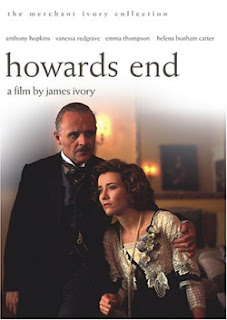
As an addendum, Merchant-Ivory’s film adaptations of A Room with a View (1986) and Howards End (1991) both rank as some of the best film adaptations I’ve ever seen. David Lean’s version of A Passage to India (1984) is also well worth watching.

Monday, October 11, 2010

Kathryn Stockett: The Help

**This guest post was contributed by Bookwyrm, an literature devotee who will be joining Worthy of Note as a regular co-author. Look for more reviews from her in the coming months!**

The Civil War was fought in the 1860s, right? Well, maybe it was the ‘60s, but Kathryn Stockett’s novel The Help suggests that it was the 1960s. The book tracks the stories of three women—two black, one white—trying to make a living and do the right thing in the time of the Civil Rights movement. But their war is not fought on the front lines in Washington D.C. They bring the battle home, to the working relationship of black domestic servants with their white employers. This book is the story of an alliance between these women to treat people as people, no matter their color.


The winds of change are blowing in 1962. Rosa Parks has refused to budge on a bus, and Martin Luther King, Jr., is on the march to D.C. But in Jackson, Mississippi, there is an equally strong push to keep things the way they’ve always been. White women get married, set out the family silver on the table, and hire black maids like second-class citizens to clean their houses and raise their children. The Help gets inside their parlors and segregated bathrooms to find out what it was like.

Aibileen is a black woman of mature years. Employed as a maid all her life, her favorite part of the work is taking care of her employers’ children. She has raised 17 babies in her life, but none for more than a few years. She makes a point to resign her work at the time when the children come to realize the divide between black and white—when they no longer see her as a person. At the start of the book, she is caring for Mae Mobley, her 17th white child, and she determines that this little girl is going to be different.

Minny is Aibileen’s best friend: younger, sassier, and with five children and an alcoholic husband to support on her working salary. Her sharp tongue has gotten her fired more times than she can count, but she, too, has a story to tell. Working as a maid since she was a teenager, Minny learned from her mama how to clean a house and make a good caramel cake. But when she sees something wrong, she wants to say something about it, and there isn’t room for that attitude in Jackson.

Miss Eugenia “Skeeter” Phelan is twenty-three years old and a college graduate: a rare position for a woman in 1962 Mississippi. Her mother is afraid that her brains will ruin her chances of ever catching a man, but all Skeeter cares about is writing. Hairspray, clinking teacups, and catty society gossip make her long to get out of Jackson and be an editor in New York City. But for a single white woman with no independent income, that dream seems out of reach.

That is, until she starts talking to Aibileen and Minny and realizes that these women have stories to tell. She starts waking up to their world: a black man is shot at his home for leading an activism movement. Aibileen’s son is killed in a preventable accident due to white neglect. Black maids are imprisoned on a white woman’s word if they know too much. Yet the entire next generation of Jackson society is being raised by women like Minny and Aibileen, who have learned to keep their mouths shut or lose their futures. It’s time somebody said something about it. But Skeeter, Aibileen, and Minny have everything to lose. Skeeter has to decide whether to let herself be carried along by the status quo or stop and stand against it.

Although the themes of this book hit hard and close to home, its vibrant detail makes it engaging and endlessly readable. Stockett writes about the South with a familiarity that only a native daughter could capture. I could feel the sticky heat, smell the fried chicken cooking, and watch the okra growing in Aibileen’s garden. Their world is drawn in such distinct colors that there is no way it could be anything but real. It sweeps away the Leave It to Beaver façade of the late 50s-early 60s and dives deep into what was really going on in the ballrooms and tennis clubs and screened-in porches of the South during the Civil Rights Movement.

In the epilogue, Stockett explains that her vivid descriptions come from firsthand experience. She grew up in Jackson, Mississippi, and was raised by a black maid named Demetrie. While no novel is a verbatim record of experiences, Stockett lets the tenderness of that relationship spill over into the personalities of the many maids in the book. They are captured like portraits done with a fine pen, free of generalizations and stereotypes. They are people so real you could send them a Christmas card.

This is a story about deciding whether to do what’s comfortable or what’s right. It doesn’t disguise the consequences: brave people don’t escape from suffering in this book. In fact, brave people are often those who suffer most, at least in the short run. But The Help made me feel almost like a visitor from the future, because now I can see the difference made by people who chose to go against their entire culture and treat all people like people.

**Bookwyrm is a bibliophile born in the wrong century. A native Californian, she is pursuing an English major at Seattle Pacific University. Her current job titles include editor, reporter, novelist, and freelance writer. When she’s not at work on a children’s novel or her senior thesis, she enjoys cooking, hiking, Irish music, old bookstores, and collecting technicolor socks.**

Saturday, July 3, 2010

"Bleak House" (2005)

I have little patience for Charles Dickens. If I desired large serialized tomes with meandering prose and a cast of caricatures, I might find more value in his work, but for the present, my appetite for social drama must be whetted by Jane Austen. All that said, I found the BBC adaptation of "Bleak House" so compelling that I overcame my prejudices and tried to read the novel itself. I failed, but after re-watching the series I shall certainly redouble my efforts.


The BBC miniseries "Bleak House" has received virtually universal acclaim, at least according to Metacritic, and I can say little to dispute that it deserves it. Even the premiere episode somehow succeeds in introducing us to the typically Dickensian back-story and a massive cast of characters within its brief 30-minute window while still somehow maintaining our interest. It is a remarkable tribute to Andrew Davies, the screenwriter who also boasts the writing credit for the 1995 "Pride & Prejudice" miniseries, that he manages to cover so much of Dickens' plot while trimming the fat. "Bleak House" is simultaneously faithful to the source material, while excising the novel's qualities that would not appeal to a modern audience (such as, say, the ungodly length and tediousness of it all). It's rather difficult to evaluate the cinematography and soundtrack when they are so bipolar. The director did an exceptional job when showing action or dialogue, but for the establishing shots of landscapes and locations both picture and sound become melodramatic and obnoxiously percussive.

Now for the characters. Gillian Anderson (the actress who plays Lady Dedlock) attracted the most attention from U.S. audiences due to her role as Scully on "The X-Files, and she certainly deserved the laurels for her portrayal of the depressive wife of an aristocratic septuagenarian. Yet hers was not the only great performance in this series.

Anna Maxwell Martin effectively carries the entire series as Esther Summerson, the shy but exceptionally kindhearted young lady who was raised as an orphan but is discovered to be the illegitimate child of Lady Dedlock's youth. Her performance is consistently understated, which fits the character, and even when not onscreen she arrests our sympathies and grounds us in the world of Victorian England.

I was less impressed by the acting for Ada Claire and Richard Carstone (by Carey Mulligan and Patrick Kennedy, respectively), though it should be said that both of their characters were not written with much complexity in the first place. The most dramatic moment for Mulligan's character came in her embrace of Esther recovering from smallpox. Yet we hardly see Ada's face during the scene, as the camera remains entirely on Esther. Meanwhile, Kennedy effectively conveys Richard's fundamental transigence, and slow descent into obsession with the Jarndyce court case, but is left with little else to do. His is more a performance of makeup than a performance of spirit.

I feel similarly towards the character of Allan Woodcourt (played by Richard Harrington). He is clearly a sympathetic figure, and we see his growing affection for Esther, but he is not a compelling character. He is seen only on rare occasions throughout the miniseries, and those moments are not enough to define his character. This is perhaps due to the character's role: he is a foil for Esther, and is treated accordingly. Yet the obsessive and neurotic Guppy (played by Burn Gorman) is given a more definitive personality, though he is just as much a foil for Esther and for Esther's plot.

The character of John Jarndyce, played by Denis Lawson, is for me a much more engaging and sympathetic character, as Esther's guardian and host, who discovers that he is falling in love with his (much younger) ward. Even though modern audiences are sufficient attuned to the plot of romantic comedies to know that Esther is destined to love and marry Woodcourt, and we therefore rejoice in their happy ending, it is Jarndyce who carries the story and much of our sympathies during it. He is the more rounded character, and more central to the story.

The police constable, Mr. Bucket, is played by Alun Armstrong, who is not given much opportunity to shine until the second half of the miniseries, after the death of Mr. Tulkinghorn. I cannot tell if credit goes to the actor or to the director, but this struck me as one of the best performances on stage. When I saw him sipping wine while gazing at the corpse of Mr. Tulkinghorn, my first reaction was to laugh at the absurdity of it, then shrug at the appearance of another self-centered weasel who would use his position for no good. But then I realized how sharp Mr. Bucket actually was, how he was using nonchalance to coax cooperation from Mr. Clamb, the law clerk. He used his ability to put people at ease, to ensure that he could gather all the requisite evidence, and to ensure that everything worked out for the best. His passing comment to Mr. George, that arresting him falsely for the murder did him good because it reunited him with his mother, was brilliant, and made me realize that he actually had no concept of George's guilt in the first place. George, Dedlock, Hortense, Smallweed, and all the other schemers in the story, anyone with their own secrets and motivations, they were all outsmarted by a man who on first glance seemed a dunce, who bore more resemblance to Watson than to Holmes.

There is a panoply of other minor characters, each of whom are with few exceptions well-drawn and well-acted, and even those who are not are often hilarious (I'm thinking at this moment of the giggly Mrs. Guppy). However, as with so many stories, it is the villains who have the best scenes and best stories. It is hard to conceive of a more repulsive character than Mr. Smallweed (Phil Davis), the paralytic moneylender who barks orders at everyone and whips the servants who must carry him around everywhere. He is truly vile, and almost certainly barking mad besides ("Bad debt! Bad debt! I hate it!"). On the other hand, Harold Skimpole (Nathaniel Parker) is an atrocious specimen of amorality. He professes his ignorance and innocence ("I am a perfect child in such matters"), but his parasitic ability to feed off the livings of John Jarndyce and his wards and his willingness to sell the smallpox-stricken boy Jo defines this character as truly loathsome. He appears almost as an aristocratic Mephistopheles, a smooth surrogate of evil. There is a intriguing moral point to his protestations that "I am a child!" John Jarndyce points out that "I'm not sure if there is any other such child in all of Creation," but Skimpole does seem truly childish in his inability to support himself and his inability to understand the good motivations of others. He is genuinely out of his depth, even if he is a manipulative wretch.


The greatest character of the entire miniseries, however, is easily Mr. Tulkinghorn, played by Charles Dance. His entry on Wikipedia shows him holding flowers, and it is hard to imagine a more incongruous image after watching his performance in this miniseries. It is unfortunate that the directing and sound editing did not let his performance speak for itself, as the ominous music clearly marked him as The Bad Guy in his first appearance. Yet it is not until halfway through the series that we see him at his most villainous, in his dealings with Mr. George. Holding the threat of eviction over his head, to break down the roots of George's honor and loyalty to his dead friend, then executing that threat even after getting what he wanted, just to teach him the price of "defiance." Even the usually imperturbable Mr. Clamb did a double-take at that point. Tulkinghorn appears the true gentlemen around Sir Leichester Dedlock, only becoming menacing around Lady Dedlock. There is a wonderful scene where he expresses in the most genteel of words his devotion to the Dedlock family... only to follow with words of steel that he is loyal to the family "whatever the cost to others." It is a chilling moment, as the battle lines are drawn between Lady Dedlock and her solicitor. However, it cannot even come close to the scene where Tulkinghorn encounters Mr. Guppy in a sitting room with Lady Dedlock. Lady Dedlock explains that they had just concluded business, and as Mr. Guppy tries to exit, Tulkinghorn turns a positively monstrous gaze upon him. I did not think it was possible, but at that moment I felt genuine sympathy for the poor Mr. Guppy, and Tulkinghorn is the only possible character who could have inspired such feelings of pity for such a repulsive creep that Guppy was.

As for the story, it is almost impossibly complicated, yet it is not so difficult to follow once you're in the thick of it. Thus, it cannot be easily described, but I'm not even sure if it ought to be, since the story really isn't the point. Besides a few unpredictable twists that provide dramatic flair (such as the first literary instance of spontaneous combustion), the plot proceeds along familiar lines, and the ultimate resolution is telescoped from early on. It is not hard to predict where the characters end up. My one complaint about some of the plot points was that, while Dickens knew how to set up a dismal atmosphere, he really didn't know how to dispatch characters easily, or how to integrate their elimination with the plot. The first death, that of Captain Hawdon (alias Nemo), is from opium overdose -- very convenient, to die just before he would have had a role in the story. The second death, of Mr. Krook, is by spontaneous combustion. In this instance, Krook's death was necessary to enable his collection of papers to circulate, but Dickens clearly didn't want to be bogged down with another court case involving murder or even accidental death, and thus resorted to a freak of nature. The third death, involving Mr. Tulkinghon, was at the hands of a minor character who had the least possible reason for wishing his death. Dickens set out two immensely plausible suspects -- Lady Dedlock and Mr. George -- both of whom wish him dead for intensely personal reasons grounded in the story, but it turns out that Tulkinghorn was murdered by Hortense in a rage because he did not find her a job. The murder investigation was a single, giant head-fake by Dickens. [UPDATE: I forgot to mention the death of the boy Jo, which was effectively portrayed and quite powerful, but did not affect the plot in any significant way.] The fourth death, of Lady Dedlock, makes more sense in the novel than in the miniseries (in the book, she is being harried and suspected as a potential murderess; in the miniseries, she was already cleared, but had fled Chesney Wold to preserve Sir Leichester's honor). The final and fifth death, of Richard Carstone, was prefigured much early in the novel by Mr. Gridley, and was therefore not as affecting. I would have found it more effective if he had either a) died before the 'true' will was discovered and he came into his fortune or b) recovered from his illness and made a fresh beginning. This would have caused quite a stir in purist circles, so I absolve the miniseries from blame, but I cannot help but hold the novel responsible for this failure of imagination.

I also found the ending to be a bit hasty and slightly dissatisfying. Ada went from losing her husband to holding her child (with the requisite tears and smiles at each) in about two seconds flat. Mr. Guppy is reintroduced and dispatched in a single scene. Esther was at one moment happily installed with John Jarndyce, then suddenly launched into happy matrimony with the other love interest Mr. Woodcourt. Having taken its precious time to deal with the intricate relations and movements in the story, the miniseries suddenly realizes it has a plane to catch. I cannot begrudge it the eight hours of its run-time (I wasn't aware eight hours of television could be so happily spent), but I definitely begrudge its inability to use any of those eight hours to craft a happier ending.

Yet, in the end, the joy and beauty of the work is not in where it resolves, but in how it gets there; it is the journey, far more than the destination, that sustains this story. It is a delight and a pleasure to watch. It made me laugh, shed a few tears (tears of manliness, mind you), and drink deep the pleasures of good literature. It is highly recommended to anyone, especially those who dislike Charles Dickens.